5 Reasons To Shoot B&W Seascapes
Black and white seascape photography strips away the distraction of color, forcing both the photographer and the viewer to engage with the raw, elemental nature of the ocean.
Here are five reasons why this medium is so compelling:
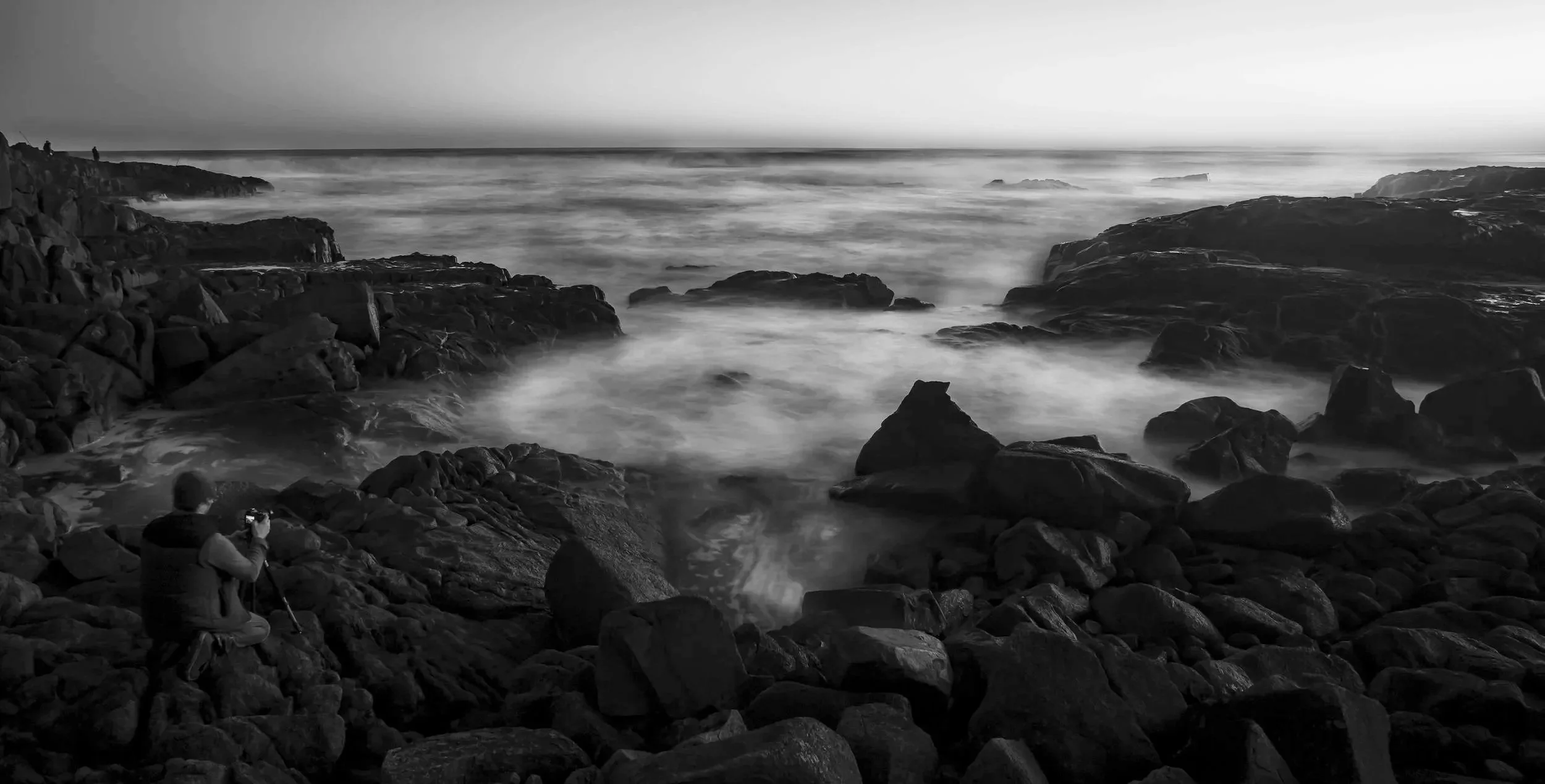
Birrubi Beach, Port Stepens
1. Emphasis on Texture and Contrast
Without color to differentiate elements, the "feel" of the image takes center stage. You can emphasize the jagged, tactile surface of wet rocks against the soft, ethereal spray of crashing waves. The interplay between deep shadows and bright foam creates a l la range that feels more dramatic and powerful than a color equivalent.
2. Timelessness and Abstraction
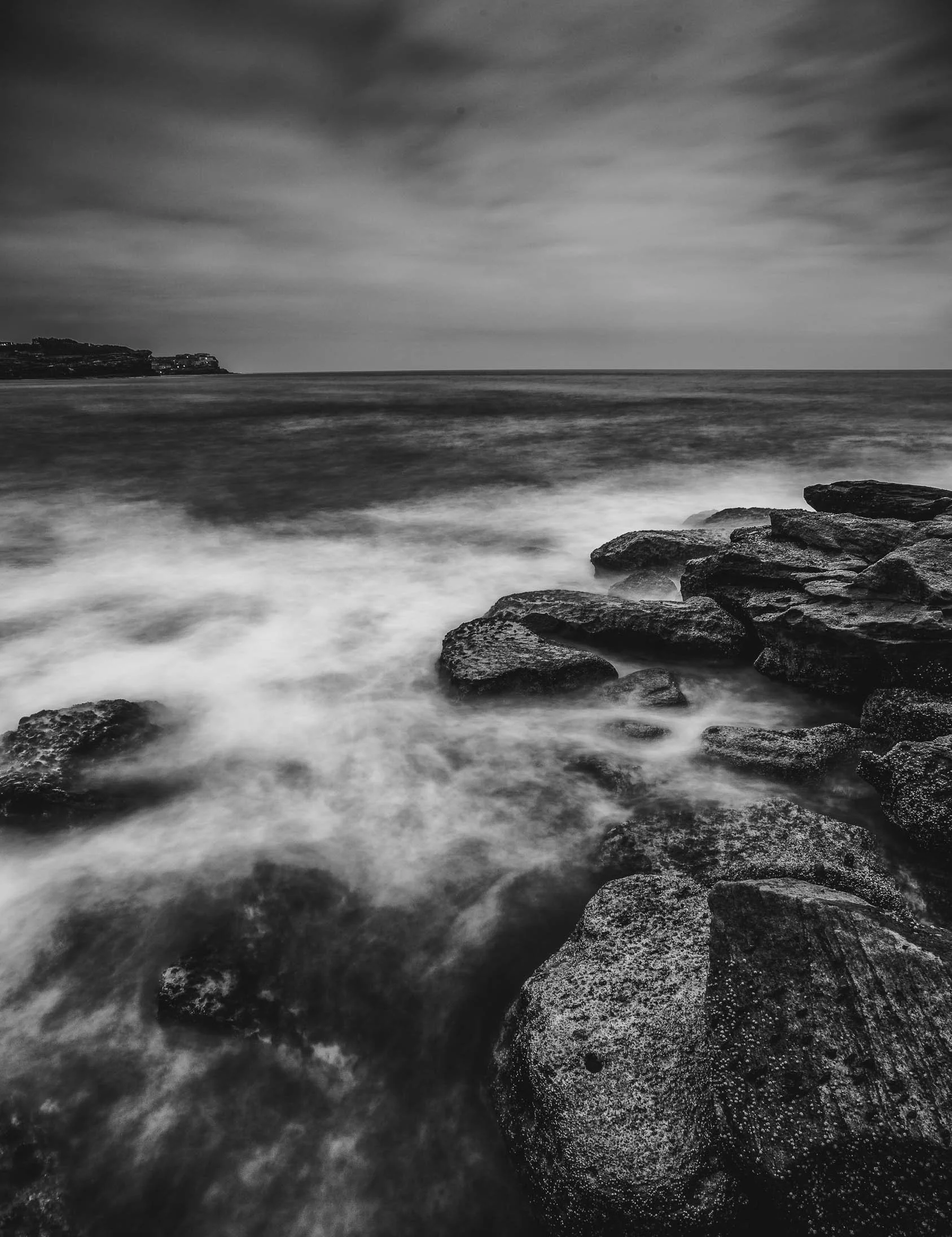
Color often anchors a photo to a specific time of day or season (like the orange of a sunset). Black and white removes those chronological markers, lending the seascape a timeless, fine-art quality. It allows the viewer to focus on the ocean as a primal force rather than just a specific afternoon at a specific beach.
3. Masterful Use of Long Exposure
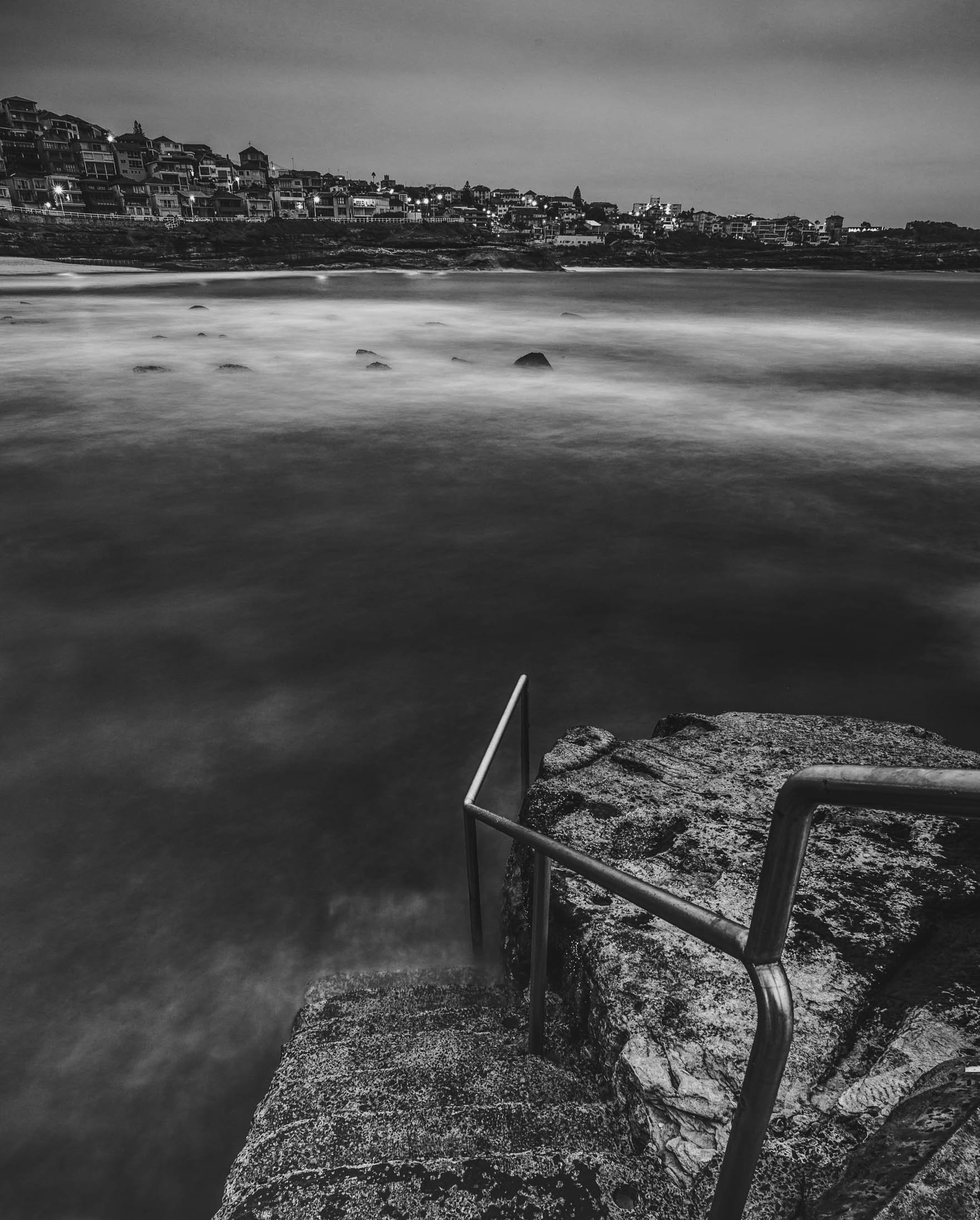
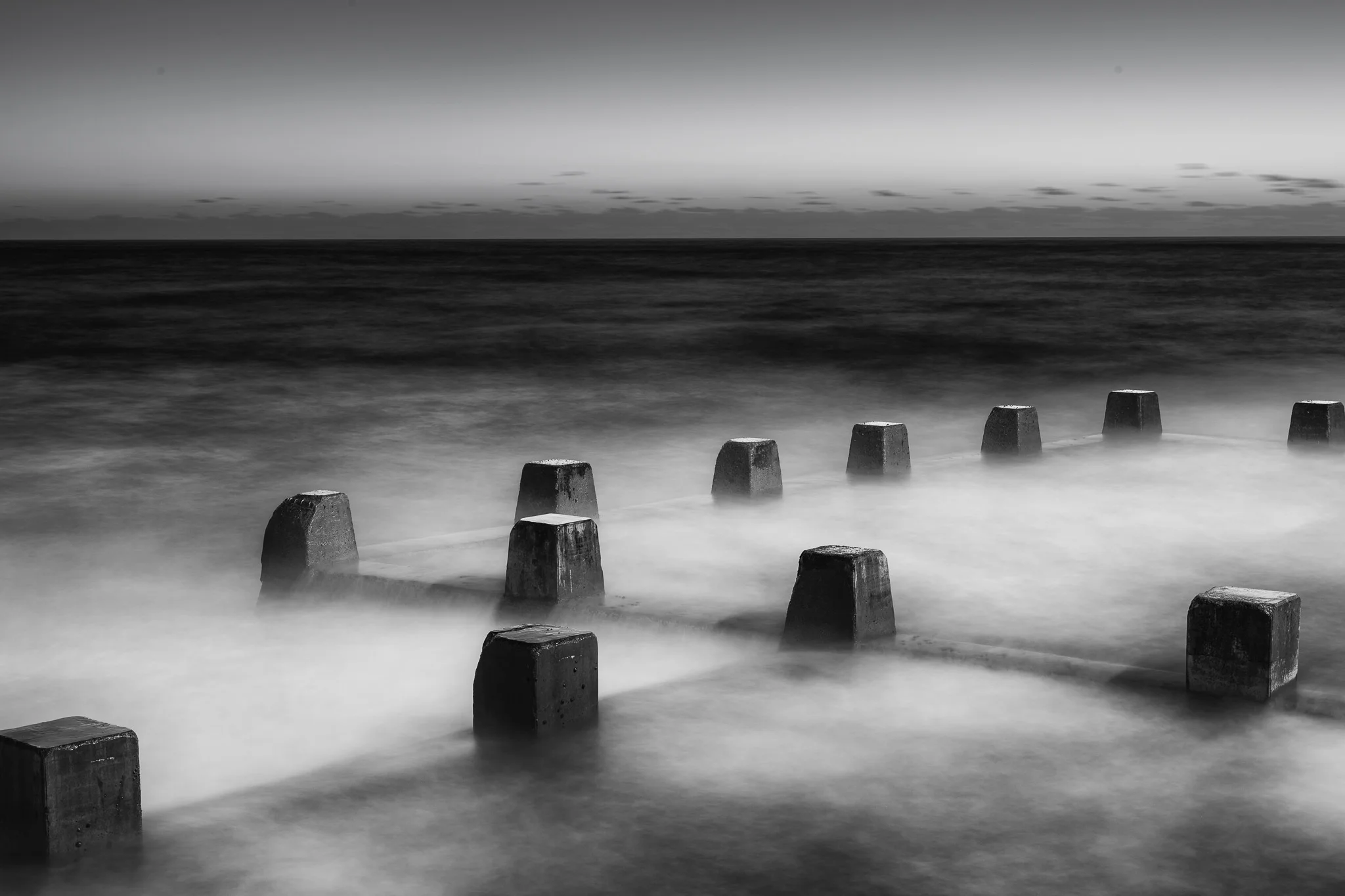
Seascapes are the perfect playground for long-exposure techniques. Converting these shots to monochrome highlights the tonal gradients created by moving water.
Mist-like water: Long exposures turn chaotic waves into a silky, fog-like texture.
Leading lines: Without color, the structural lines of a pier or a receding tide become much more prominent, guiding the eye through the composition.
4. Highlighting Form and Geometry
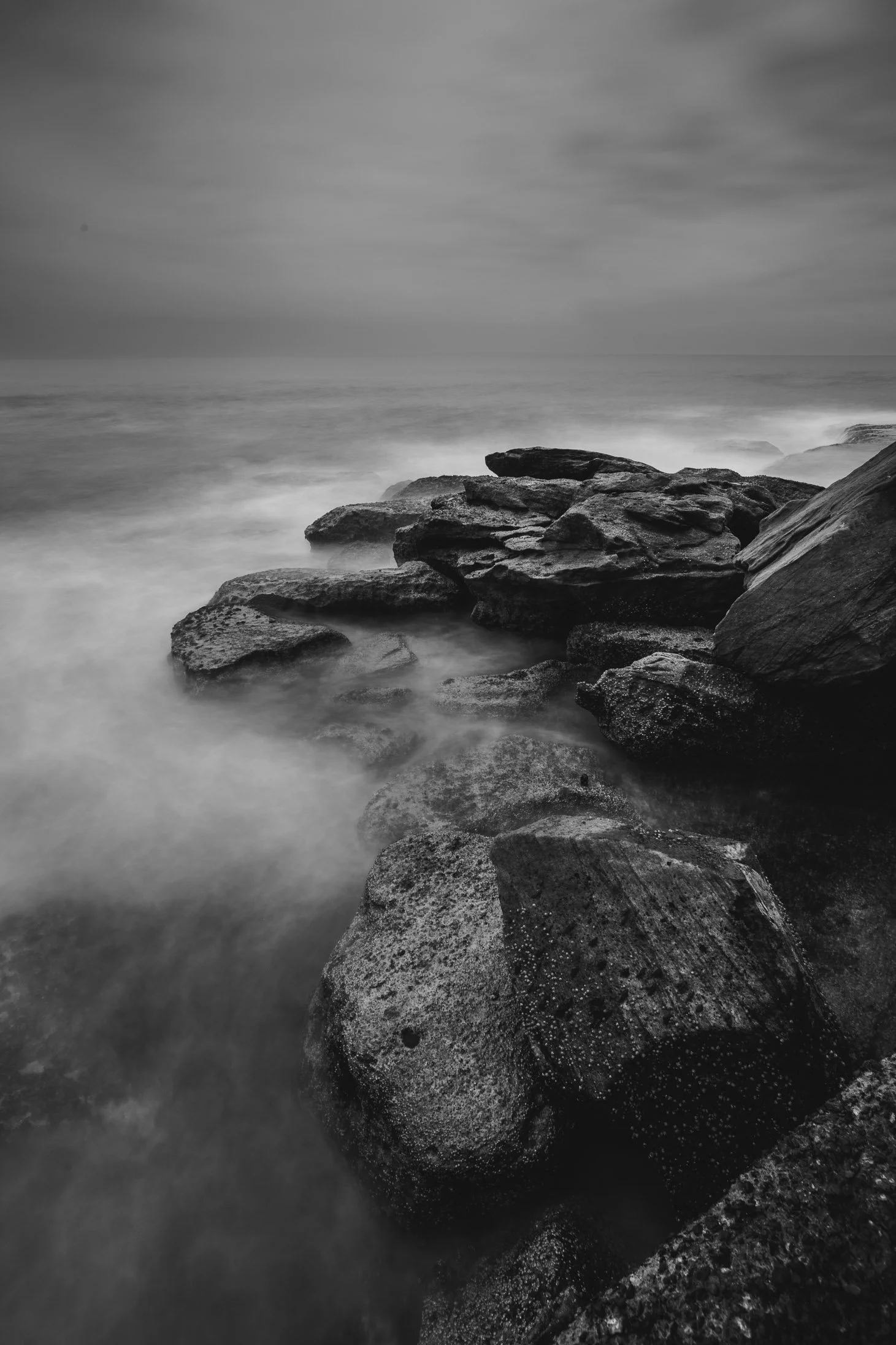
In monochrome, the composition relies heavily on shape and silhouette. The curve of a shoreline or the vertical starkness of an ocean pool becomes a structural element in a larger geometric puzzle.
5. Evoking Mood and Atmosphere
Black and white excels at capturing the "soul" of the weather.
Melancholy: A grey, overcast day becomes a moody, contemplative study of solitude.
Power: A storm becomes a high-contrast battle between dark skies and white crests. It simplifies the emotional palette, allowing you to tell a clearer, more evocative story of the sea’s temperament