Japan is often cited as having some of the most vivid and diverse autumn colors (known as koyo) in the world. While North America is famous for its vast forests of red and gold, and Europe is known for its rolling yellow landscapes, Japan’s foliage is unique due to a combination of botany, climate, and geography.
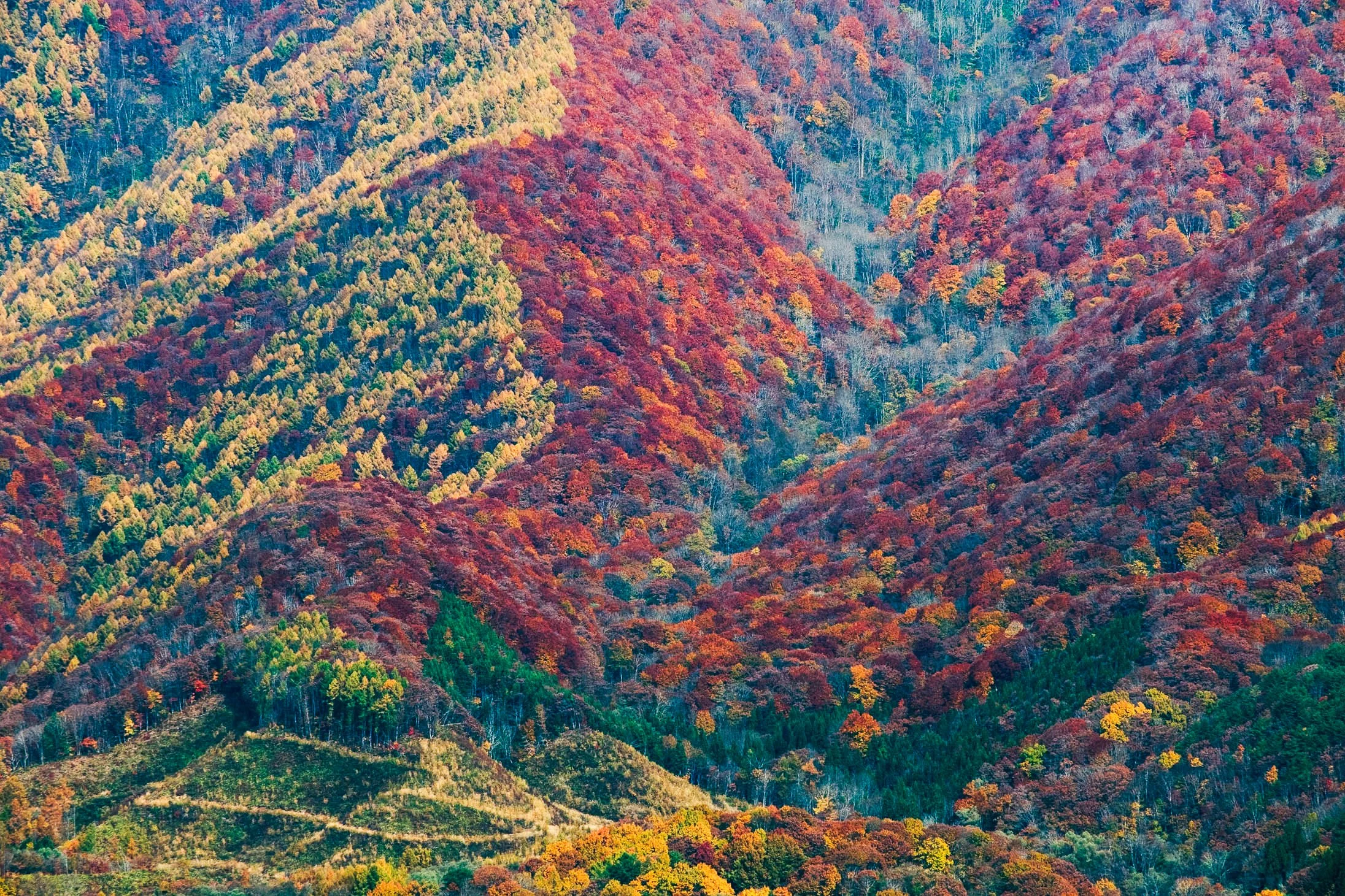
Tohoku Region, Japana
1. Massive Species Diversity
Japan has an incredible variety of deciduous trees compared to other regions like Europe.
**The "Momiji" (Japanese Maple): Japan is home to over 25 species of maple trees. The Japanese Maple (Acer palmatum) is genetically predisposed to turn a deep, brilliant crimson that is often more intense than the reds found in other parts of the world. Mixed Forests: About 70% of Japan is mountainous and forested. These forests are a mix of broad-leaved deciduous trees (reds and yellows) and evergreens, which provides a high-contrast backdrop that makes the colors "pop" more than a monochrome forest.

Kawaguchiko, Mt. Fuji
2. The "Perfect" Autumn Climate
The vibrancy of a leaf's color is determined by the synthesis of anthocyanins (red pigments). Japan’s climate is perfectly tuned for this. Sharp Temperature Spikes: For the best reds, you need warm, sunny days followed by crisp, cold nights (around 5°C to 7°C). Japan’s mountainous geography creates these dramatic daily temperature swings.
High Humidity and Rainfall: Japan’s rainy summers ensure trees are healthy and hydrated. If a region is too dry, leaves often turn brown and fall off early; in Japan, they stay on the branch longer, allowing the colors to fully saturate.
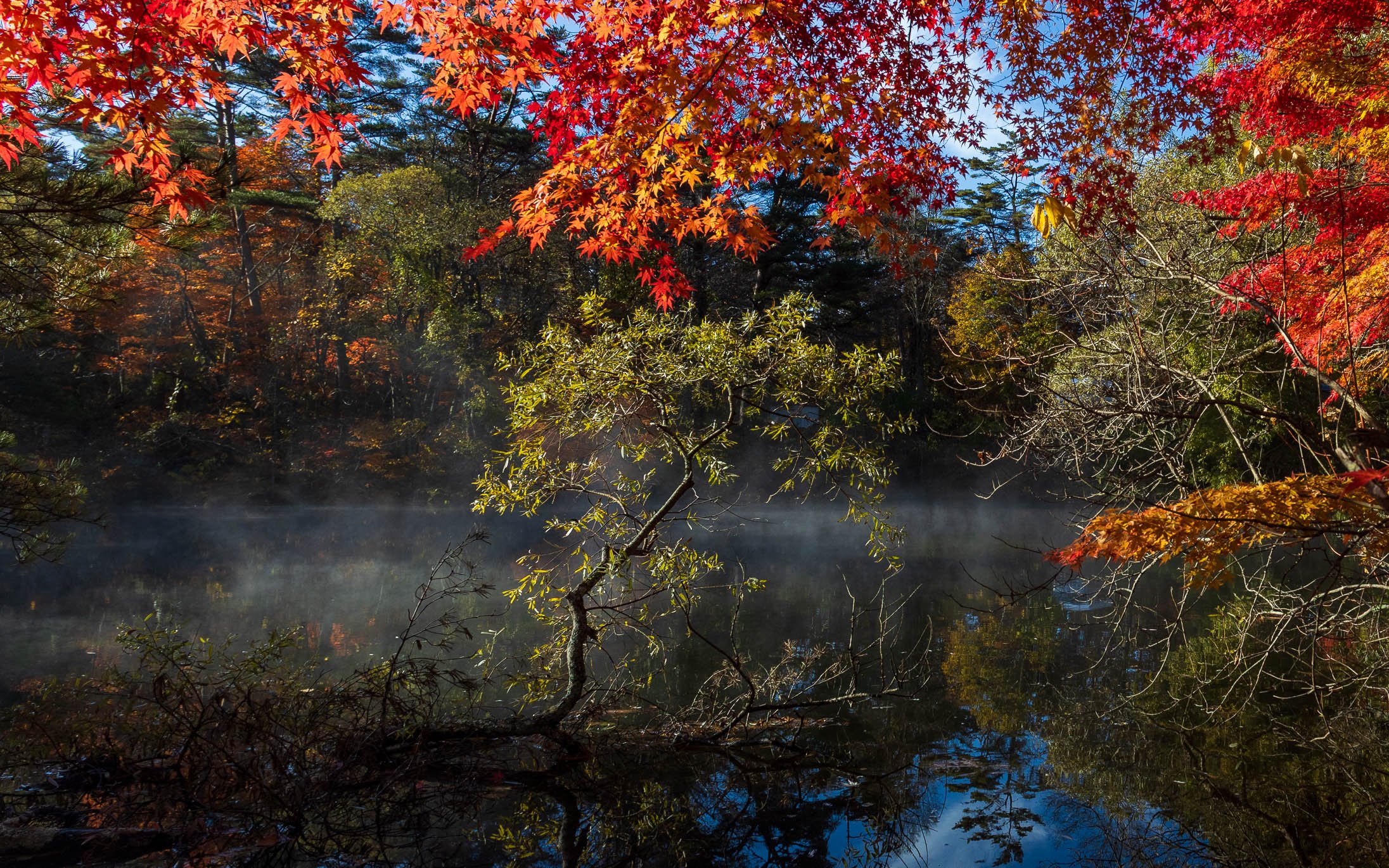
Goshiki-Numa Ponds, Fukushima
3. Geographical "Stretching"
Japan is a long, narrow archipelago stretching from North to South. This creates a "front" of autumn colors that moves slowly down the country over about 90 days. Because of the varying altitudes and latitudes, you can find peak foliage somewhere in Japan from late September (in Hokkaido) all the way until early December (in Tokyo/Kyoto).

Goshiki-Numa, Fukushima
4. Cultural Preservation and Curation
In Japan, autumn color is not just a biological event; it is a curated experience.
Temple Landscapes: For centuries, monks and gardeners have strategically planted trees around temples and shrines to frame specific views. The juxtaposition of a neon-red maple against a dark wooden temple or a mossy green garden creates a visual intensity that you don't typically find in wild, unmanaged forests.
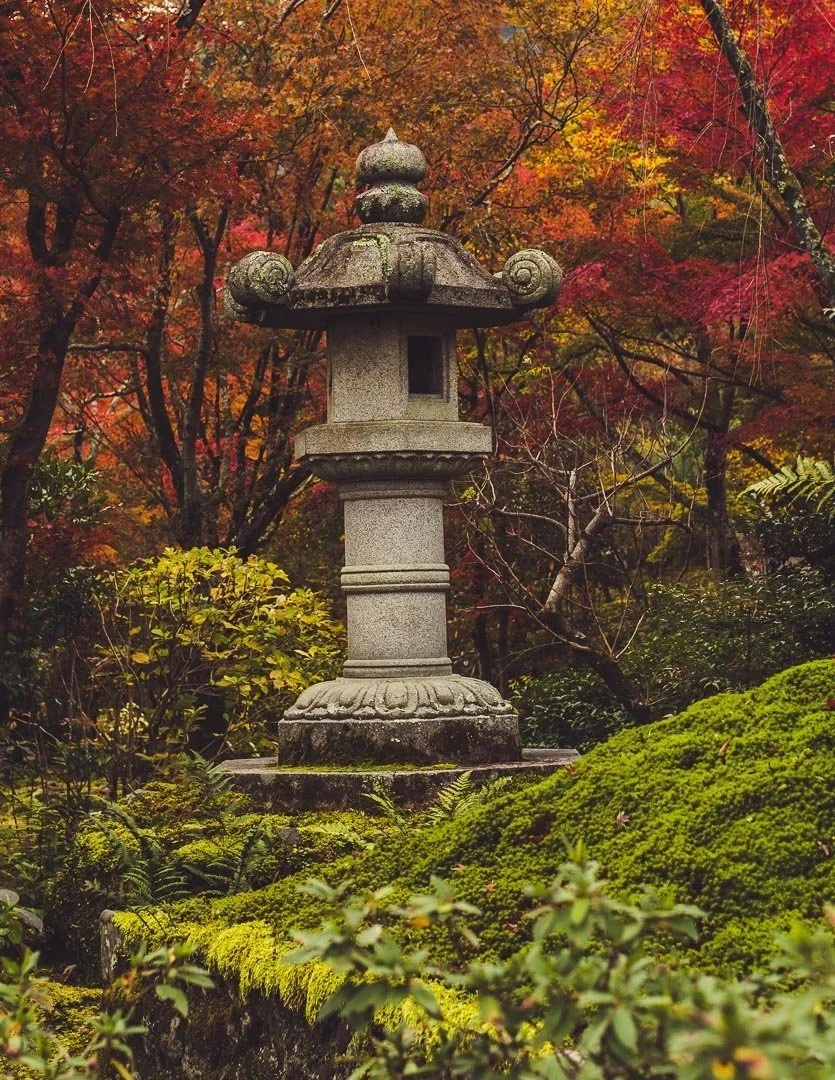
Arashiyama, Kyoto